
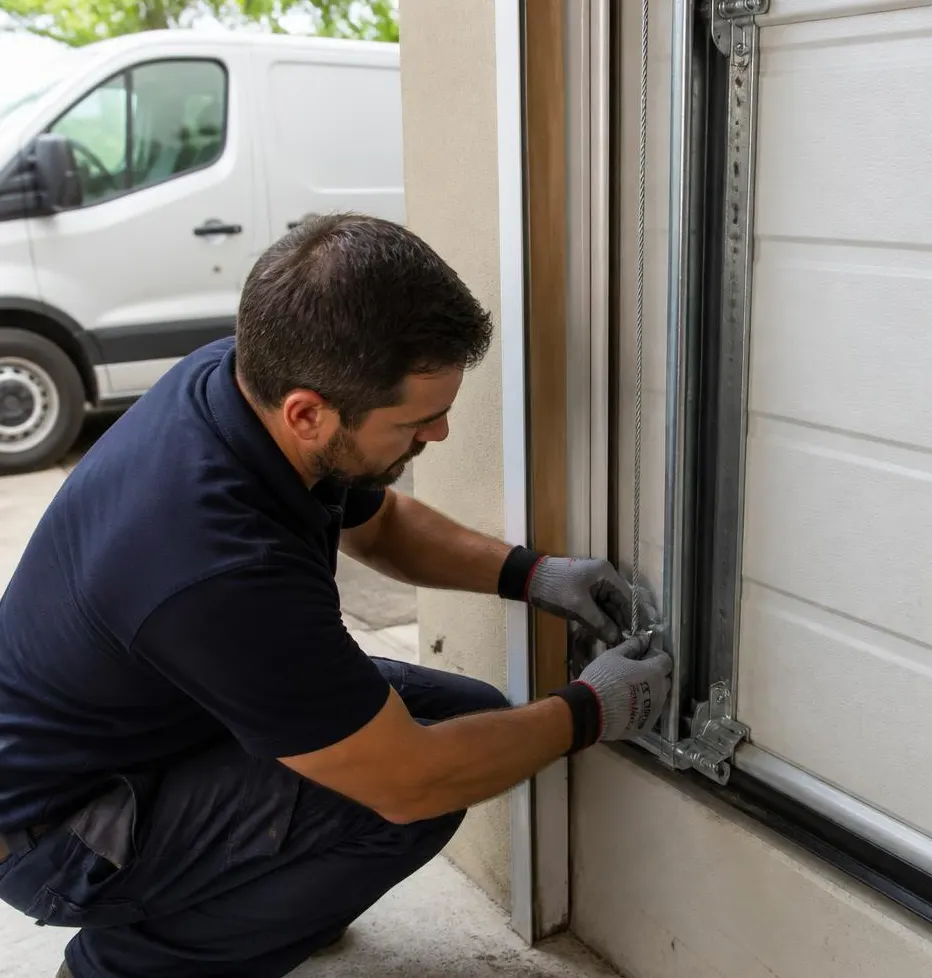
No, a commercial overhead door is not just a residential garage door scaled up. They're built from heavier materials, run on different spring and track systems, and are designed to survive far more open-and-close cycles than a house door ever sees. If you're arguing about whether the door on your shop, barn, or rental property needs the same care as the one on your house, the short answer is: it needs more, and different, care.
What Actually Makes Them Different
A residential garage door is usually made from lighter-gauge steel or aluminum, sized for a car and a couple of storage bins, and designed to open a handful of times a day for decades. Commercial and warehouse doors are a different animal:
- Heavier gauge panels — built to handle impact from equipment, pallets, or vehicles bumping the frame.
- Wider, reinforced tracks — needed to support larger, heavier door sections without binding.
- High-cycle springs — residential torsion springs are typically rated for around 10,000 cycles; commercial springs are often rated for 25,000 to 50,000+ cycles because the door opens and closes so much more often.
- Bigger, tougher openers — commercial openers run higher horsepower motors built for continuous or heavy-duty use, sometimes with chain hoists instead of belt drives.
- Different door styles — rolling steel doors, high-speed fabric doors, and heavy sectional doors show up on commercial buildings far more than on houses, each with its own maintenance quirks.
Put plainly: the parts look similar from across the parking lot, but the engineering behind them is built for completely different workloads.
Why Usage Changes Everything
A homeowner's garage door might cycle once or twice a day. A warehouse door on a working property can cycle dozens of times in a single shift, often under load, sometimes with a forklift or truck brushing close to the frame. That kind of use wears out rollers, hinges, and cables much faster, and it puts more stress on the spring system every single day.
This is also why a residential-grade door installed on a shop or small commercial building — because it was cheaper or already on hand — tends to fail early. The springs wear out fast, the opener burns out trying to keep up, and the track starts to rack under repeated heavy use it was never designed for.
Maintenance Needs: Different Schedule, Different Stakes
Because commercial doors cycle more and often guard more valuable contents — inventory, equipment, vehicles — the maintenance schedule has to be tighter. A few things matter more here than they do for a typical house door:
- More frequent lubrication and tension checks. High-cycle springs and rollers need regular attention; skipping a season can mean the difference between a scheduled adjustment and a snapped cable mid-shift.
- Track and panel inspection after storms. The sudden severe storms, hail, and wind that roll through this part of Texas can rack a track or dent a panel just enough to throw off alignment — and a misaligned commercial door under daily heavy use fails faster than a misaligned residential one.
- Dust and grit management. Long hot summers mean dry conditions and blowing dust, which works its way into tracks and rollers on doors that open constantly throughout the day. Warehouse doors near gravel lots or farm equipment see this worse than a typical home garage.
- Weatherstripping checks before storm season. A commercial door with worn seals lets in wind-driven rain and dust at a much bigger scale than a house door — more surface area, more exposure, more potential damage to what's stored inside.
None of this means a homeowner needs to treat their garage door like a warehouse door. It means the stakes and schedule are different, and swapping maintenance habits between the two doesn't work in either direction.
What This Means If You're Building or Buying
If you've got a shop, barn, or detached workspace on your property and you're using it for anything heavier than lawn equipment — frequent vehicle traffic, tools, livestock gear — a standard residential door is usually the wrong call. A higher-cycle door and spring system costs more upfront but avoids the early failures and repeat service calls that come from overworking a door built for light home use.
When to Call Dayton Garage Door Service
If you're not sure whether your current door — home or shop — is rated for how hard you're using it, that's worth a second opinion before something breaks mid-use. Dayton Garage Door Service works on both residential and commercial overhead doors across Dayton, TX and the surrounding area, and can tell you quickly whether your spring system, track, and opener actually match your usage.
A few situations worth a call:
- You're installing a new door on a shop, garage, or small commercial building and want the right door and opener for the job — that's a Garage Door Installation conversation worth having before you buy anything.
- Your current door cycles a lot — daily heavy use, frequent opening and closing — and you want a maintenance plan that actually fits that workload. That's where routine Garage Door Maintenance pays for itself, catching worn rollers and loose track hardware before they turn into a stuck or jammed door.
If you're in Dayton, Liberty, Mont Belvieu, Crosby, Huffman, Baytown, Ames, or Hardin and you want a straight answer on whether your door setup matches how you actually use it, give Dayton Garage Door Service a call. Fair pricing, no surprises, and a crew that shows up when they say they will.